
Regional Pulse
Regional Pulse · Digital fraud in Guatemala: only 12% refunded
In Guatemala, the Superintendency of Banks reported more than USD 2 million in unrecognized electronic transactions between January and October, and banks refunded just 12% of the fully identified cases. One of its officials told Congress that the supervisor has no coercive power to order a refund.
Who pays for digital fraud
The week's regulatory decisions in Central America and the Caribbean, in five minutes. This time, two supervisors facing the same fraud.
In Guatemala, the Superintendency of Banks reported more than USD 2 million in unrecognized electronic transactions between January and October, and banks refunded just 12% of the fully identified cases. One of its officials told Congress that the supervisor has no coercive power to order a refund.
The Dominican Republic is building the whole system. The Monetary Board is preparing additional capital to cover losses from fraud and cyber risk, due to take effect in April 2027, and ProUsuario has ordered RD$817.3 million returned since August 2020.
When no rule says who answers, the loss stays with the customer. What would make it work in any country is written responsibility, capital to back it and the authority to order the refund.
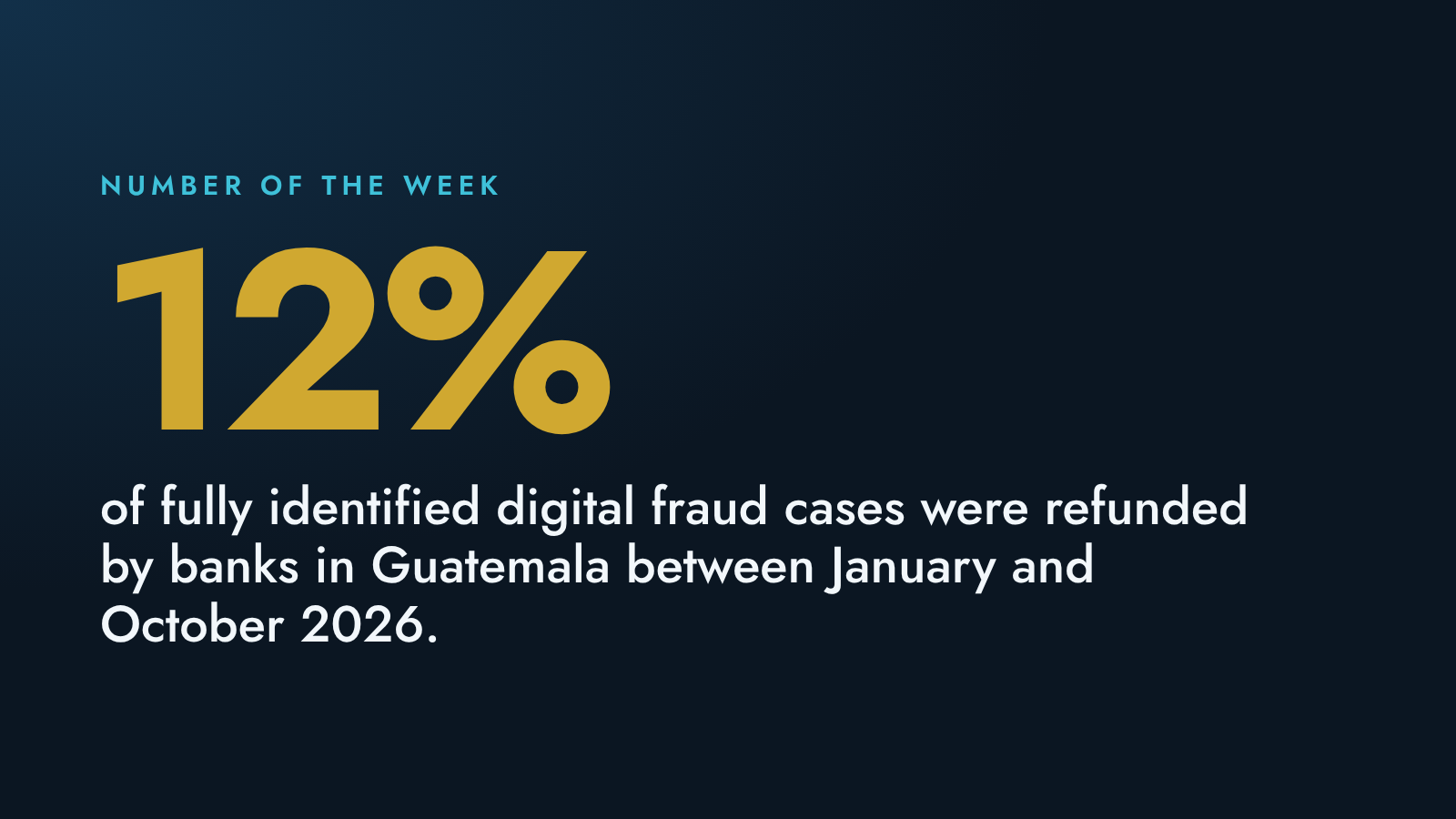
12% of fully identified digital fraud cases were refunded by banks in Guatemala between January and October 2026.

AI, Outlook and two laws
The Ibero-American Data Protection Network unanimously approved standards on personal data in AI covering more than 600 million people. Data being public on the internet is not enough to train models, and automated decisions can be challenged before a person.
Microsoft fixed an already exploited flaw in Outlook and CISA set a deadline of November 24, according to Qualys. The fix ships with the Office update, so check that it is not left out of your patching.
In Guatemala, Congress rejected by 124 votes to 10 the objections to Decree 26-2026, which went to the president; as of Friday 13 there was neither signature nor veto. And Jamaica is taking a national cybersecurity council to Cabinet that will run for 24 months and prepare a permanent authority.

You fall to your systems
James Clear says it in Atomic Habits: "You do not rise to the level of your goals. You fall to the level of your systems." British cycling started winning when it changed its system, not its goal.
Every supervisor wants less fraud. The result changes when someone defines who pays, how much capital is set aside and which regulation orders it, as in the Dominican case. Use it with a regulator, a client or your team: ask what gets repeated every day to reach the goal.


Growing and losing money
On Corplife360 I published "The Big Customer That Loses Money": growing revenue can make the business worse. And on my site I explained what a spectrum tender is and why it matters.
Three reads from Harvard
In Harvard Business Review, Leandro DalleMule and Thomas H. Davenport ask you in "What's Your Data Strategy?" to choose deliberately between defending data and putting it to work; by their account, more than 70% of employees have access to data they should not.
Natalie Burford, Andrew Shipilov and Nathan Furr show in "How GDPR Changed European Companies' Tech Stacks" that, out of 400 companies, those most tied to a few integrated vendors suffered more under regulation. And Christian Schuh, Wolfgang Schnellbächer and Daniel Weise remind us in "3 Steps to Prepare Your Supply Chain for the Next Crisis" that almost every risk is a "gray rhino": predictable and neglected.

Dates for your calendar
From Tuesday 17 to Friday 20 November, Santo Domingo hosts CyberWeek@LAC4. From Tuesday 17 to Sunday 22, Honduras will not issue passports while it migrates to its new migration system; service returns on Monday 23.
Tuesday 24 is the CISA deadline for the Outlook flaw. Further out, Panama's AI law goes back to committee, most likely in January 2027, and April 2027 is when the Dominican capital add-on is expected to take effect.
Your turnWho pays
When digital fraud empties an account and, as in the Guatemala figure, only 12% of cases are refunded, who should carry the loss? Reply to me and forward this edition to whoever should read it.